

Description
Thermoplastic Road Marking Paint Price in Papua New Guinea
The price of thermoplastic road marking paint in Papua New Guinea depends on raw material cost, resin quality, pigment selection, glass bead configuration, packaging style, order quantity, shipping route, destination port, inland delivery distance, and project specification. Different road marking projects may require different whiteness, yellow color tone, retroreflectivity, melting performance, softening point, abrasion resistance, and drying speed.
For Papua New Guinea buyers, logistics cost is a major part of the total landed price. Shipments may be arranged through Lae, Port Moresby, or other suitable PNG ports depending on the buyer’s warehouse, customs broker, project location, and regional distribution plan. Delivery to Highlands, coastal provinces, industrial areas, mining-related roads, or remote project sites may affect the final delivered cost.
White and yellow thermoplastic road marking paint may have different formula costs because of pigment type, brightness requirements, color stability, heat resistance, UV resistance, and required visibility performance. If reflective glass beads are supplied together with the paint, the quotation should also consider bead quality, bead dosage, pre-mixed beads, drop-on beads, and the required nighttime retroreflective effect.
OEM packaging, distributor branding, customized bags, English labels, project-specific documents, and climate-specific formula adjustment may also influence the quotation. Tianhua Group does not recommend using one fixed online price for all Papua New Guinea projects. To receive an accurate factory quotation, please provide the required color, quantity, destination port, project location, packaging style, application method, glass bead requirement, and project specification.
Road Marking Paint Market in Papua New Guinea
Papua New Guinea has practical demand for road marking materials in national roads, urban roads, airport access roads, port areas, industrial zones, logistics yards, mining access roads, parking lots, school zones, pedestrian crossings, bus lanes, and road safety maintenance projects. Durable white and yellow pavement markings are important for lane guidance, night visibility, pedestrian safety, traffic organization, and long-term road asset maintenance.
The Papua New Guinea market is suitable for importers, road construction contractors, government project suppliers, traffic safety companies, construction material distributors, local wholesalers, and pavement marking service providers. Buyers who already supply glass beads, traffic signs, safety cones, traffic control products, road equipment, construction paints, or pavement materials may develop thermoplastic road marking paint as a complementary product line.
For procurement standards in Papua New Guinea, buyers should first follow the actual tender document, Department of Works and Highways requirement, project engineer’s instruction, consultant specification, donor-funded project requirement, or project owner standard. PNG road projects may refer to local Department of Works specifications, Austroads-based design practices, Australian Standards, or project-specific technical documents depending on the contract.
AASHTO M249 may be useful when a project requires white and yellow retroreflective thermoplastic striping material applied in molten form with glass beads. BS 3262 may be considered when a buyer or consultant follows British-style hot-applied thermoplastic road marking material requirements. JT/T 280-2022 can be useful for China-supplied products as a production and testing reference, but PNG buyers should normally confirm compatibility with the actual Department of Works, engineer, consultant, or project specification. Tianhua Group can discuss AASHTO M249, BS 3262, JT/T 280, Australian-style requirements, or customized technical parameters according to the buyer’s project.
| Place of Origin | China (Mainland) | Main Raw Material | Petroleum Resin, Glass Beads & Titanium Dioxide |
|---|---|---|---|
| Product Name | Hot Melt Thermoplastic Road Marking Paint | State | Powder Coating |
| Color | White, Yellow, Orange or Custom | Standards | AASHTO, BS3262, JT/T280 or Custom Standards |
| Package | 25kg/bag | Port | Qingdao Port |
| Brand Name | Tianhua Traffic | Lifetime | 2-5 Years |
| Specific Gravity | 1.8-2.3 g/cm³ | Water Resistance | Great (in water for 24 hours) |
| Optional Colors | Yellow, Orange, Red, etc. | Alkali Resistance | Great (in saturated solution of calcium hydroxide for 24 hours) |
| Heating Temperature | 150°C-220°C | Glass Beads | 20% |
| Softening Point | 110°C | Fluidity | 40s |
| Coating Appearance | No wrinkles, dots, blisters, cracks, fall-out or stick to tyres | Coating Resistance | Resist -10°C for 4 hours |
| Drying Time | Within 3 minutes | thermal stability | Under 180°C-220°C for 4 hours |
| Chroma Performance | Reverse Material (White) | Material | C5 Petroleum Resin,Titanium Dioxide, CaCO3, Wax, Glass Beads, EVA, PE and so on |
| Compressive Strength | 26 MPa | Package Details | 25kg/bag, plastic woven bag. One 20’ container can load max. 26 tons. |
| Abrasive Resistance | 42 mg | Application | Road marking, straight line, dotted line, curve, arrow, letter, etc. |
Custom Thermoplastic Road Marking Paint for All International Standards
| Standards | Component | Specification | Test Result |
| AASHTO M249 Standard | Resin | ≥20% | 21% |
| Titanium Dioxide | ≥10% | 10.80% | |
| Glass Beads | ≥30% | 31% | |
| BS3262 Standard | Resin | ≥20% | 21% |
| Titanium Dioxide | ≥10% | 12% | |
| Glass Beads | ≥20% | 21% | |
| Chinese Standard | Resin | ≥15% | 16% |
| Titanium Dioxide | ≥5% | 8% | |
| Glass Beads | ≥20% | 21% |
Main Ports and Import Options for Papua New Guinea
For sea freight to Papua New Guinea, Lae Port and Port Moresby are commonly considered for imported construction materials and road marking products. Lae is often important for cargo connected with Morobe Province, Highlands logistics, industrial supply, and national distribution, while Port Moresby can be suitable for buyers serving the National Capital District and nearby project markets.
Other PNG ports may also be relevant depending on the project location, such as Madang, Rabaul, Kimbe, Alotau, Wewak, Vanimo, Kavieng, or other coastal destinations. The best port should be selected according to the buyer’s customs broker, warehouse location, contractor coverage, local delivery route, and project schedule.
Tianhua Group can support full container load, less-than-container load, mixed product orders, trial orders, and sample shipments for Papua New Guinea buyers. For regular distributors, 25kg bag packaging is convenient for container loading, warehouse storage, local delivery, resale, and jobsite handling.
Before placing a bulk order, customers are advised to confirm destination port, customs broker, warehouse address, unloading conditions, storage plan, project schedule, and any packaging or documentation requirements. For remote road projects, inland transport planning should be discussed early because local delivery cost may be significant.
Local Climate, Temperature and Rainy Season Considerations
Papua New Guinea has a tropical climate with strong regional differences. Many areas experience a wet season from around November to April and a drier season from around May to October, but rainfall patterns vary by region. Northern islands and coastal areas may receive rainfall throughout much of the year, while Port Moresby and some southern areas have a clearer wet and dry season pattern.
For road marking construction, wet pavement and high humidity are important concerns. If the pavement is wet, dusty, muddy, oily, or contaminated, adhesion may be reduced and the final marking performance may be affected. Contractors should avoid applying thermoplastic material on wet pavement and should allow enough time for cleaning and drying before marking work begins.
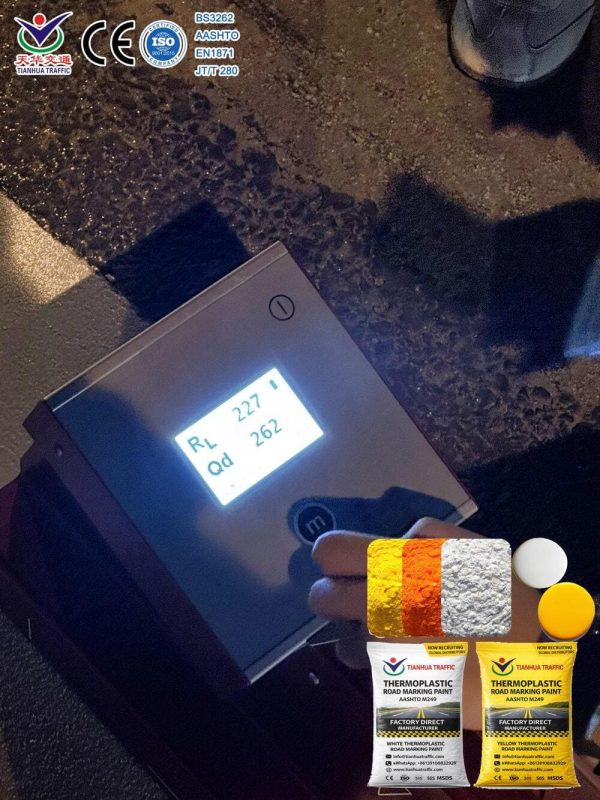
Heavy rainfall, high humidity, strong sunlight, coastal moisture, mountain road conditions, and traffic abrasion may influence color retention, anti-cracking performance, wear resistance, glass bead adhesion, and nighttime reflectivity. In areas with frequent rain or poor drainage, surface preparation and construction timing are especially important.
Tianhua Group can adjust the formula according to Papua New Guinea climate, road surface type, application method, marking thickness, traffic conditions, glass bead performance, and project standards. For coastal roads, urban roads, port areas, airports, industrial zones, mining access roads, and high-traffic routes, customized formula support can help improve service life and reduce maintenance frequency.
Preferred Packaging for Papua New Guinea Buyers
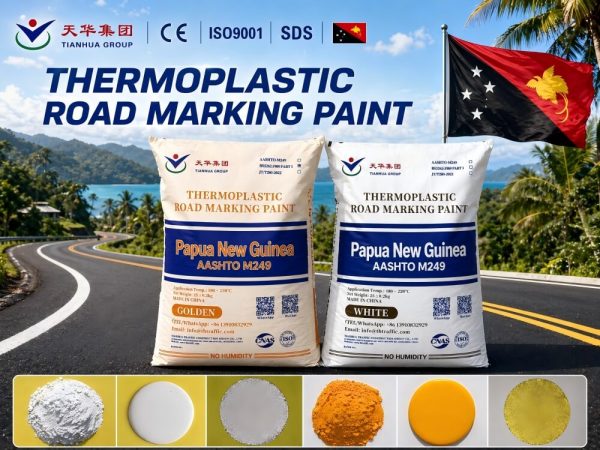
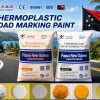
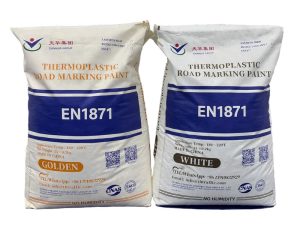
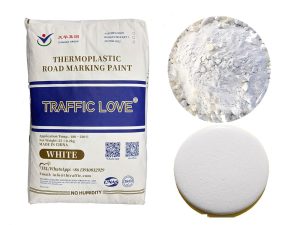
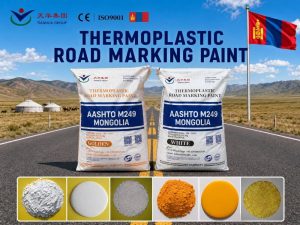
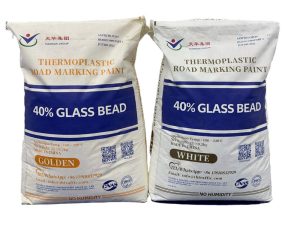
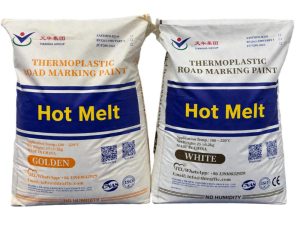
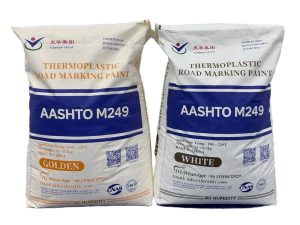
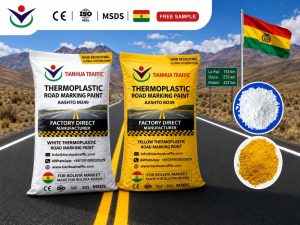
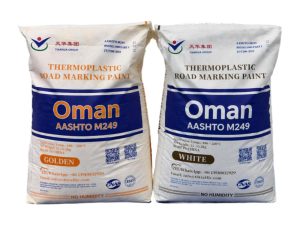
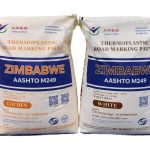
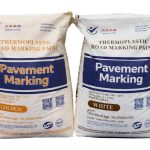
The common packaging for Tianhua Group thermoplastic road marking paint is 25kg per bag. This packaging format is suitable for Papua New Guinea importers, road contractors, distributors, wholesalers, and project suppliers because it is convenient for container loading, warehouse storage, local delivery, resale, and jobsite handling.
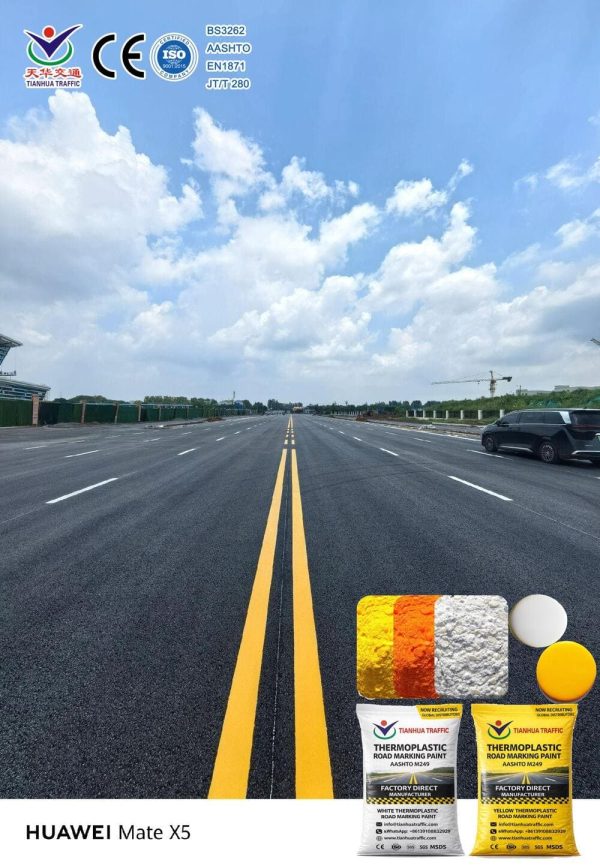
White and yellow thermoplastic road marking paint are commonly supplied for lane lines, center lines, edge lines, pedestrian crossings, school zones, parking spaces, arrows, and road safety markings. The exact color tone, softening point, flow performance, glass bead compatibility, and durability can be adjusted according to project needs.
Tianhua Group supports OEM packaging, private label bags, English packaging, neutral packaging, distributor branding, and customized bag design. If local distributor information, product batch details, or project-specific labels are required, the packaging design can be discussed before production.
Good packaging is important for Papua New Guinea because the product may be stored in hot and humid conditions, handled through coastal ports, transported inland, or delivered to remote jobsites. Bags should be protected from moisture, direct sunlight, rough handling, and unsuitable storage conditions to maintain stable product quality before application.
Application Areas in Papua New Guinea
Tianhua Group thermoplastic road marking paint can be used in many Papua New Guinea road and infrastructure scenarios. Typical application areas include highways, national roads, urban roads, parking lots, airports, ports, industrial zones, logistics yards, school zones, pedestrian crossings, bus lanes, and general road safety projects.
- National roads, provincial roads, and regional transport corridors
- Urban streets and municipal roads in Port Moresby, Lae, Mount Hagen, Madang, and other cities
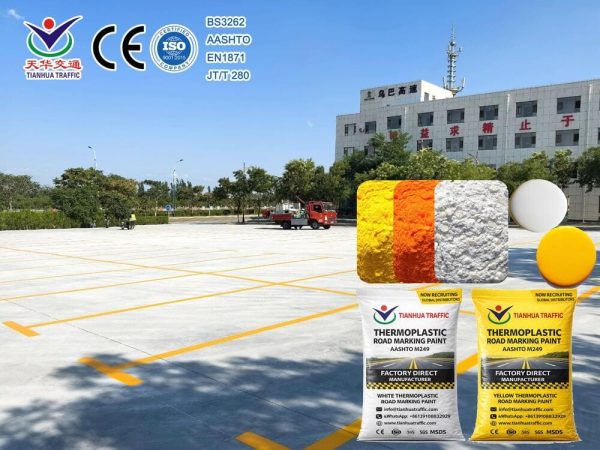
- Parking lots, commercial areas, public facilities, and residential communities
- Airport access roads and service traffic areas
- Port logistics zones, container yards, and warehouse roads
- Industrial areas, mining access roads, factory roads, and construction sites
- School zones, pedestrian crossings, stop lines, and safety markings
- Bus lanes, arrows, lane dividers, edge lines, and road maintenance markings
Papua New Guinea may share similar project requirements with nearby Pacific and tropical markets such as Fiji, Solomon Islands, Indonesia, northern Australia, and other coastal or high-rainfall regions, especially where humidity, rainfall, port logistics, and road maintenance needs are important. However, every project should still be evaluated according to local pavement condition, traffic volume, climate, application equipment, and project specification.
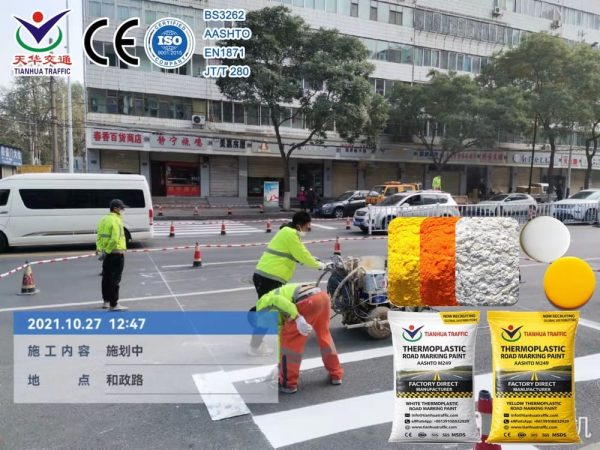
For contractors and project suppliers, common use scenarios include new road marking, old line repainting, parking lot marking, pedestrian safety marking, logistics yard marking, school zone marking, and visibility improvement for urban roads, national roads, industrial facilities, and port areas.
Application Method and Construction Guidelines
Pavement Preparation
The road surface should be clean, dry, and free from dust, oil, mud, loose particles, and other contaminants. Proper surface preparation is essential for improving adhesion and long-term performance. In Papua New Guinea, this is especially important during or after rainy periods, when pavement moisture and surface pollution may affect bonding.
Application Method
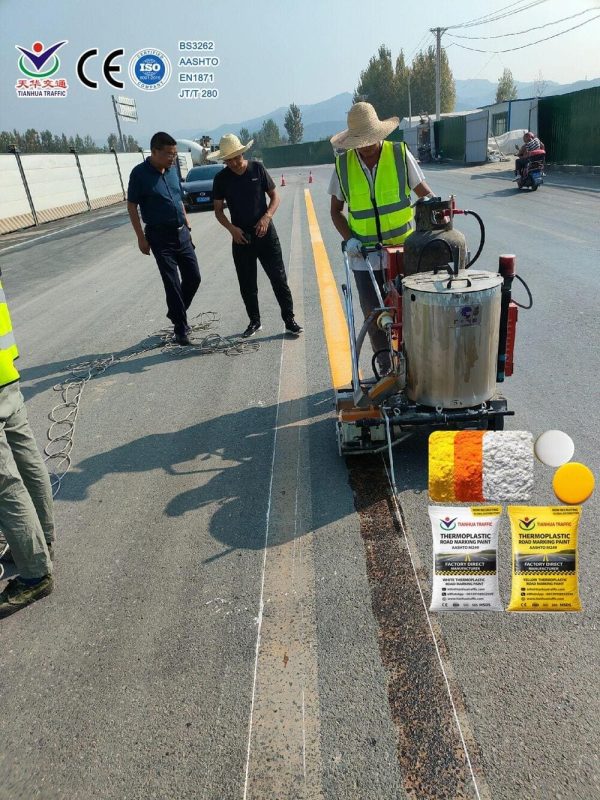
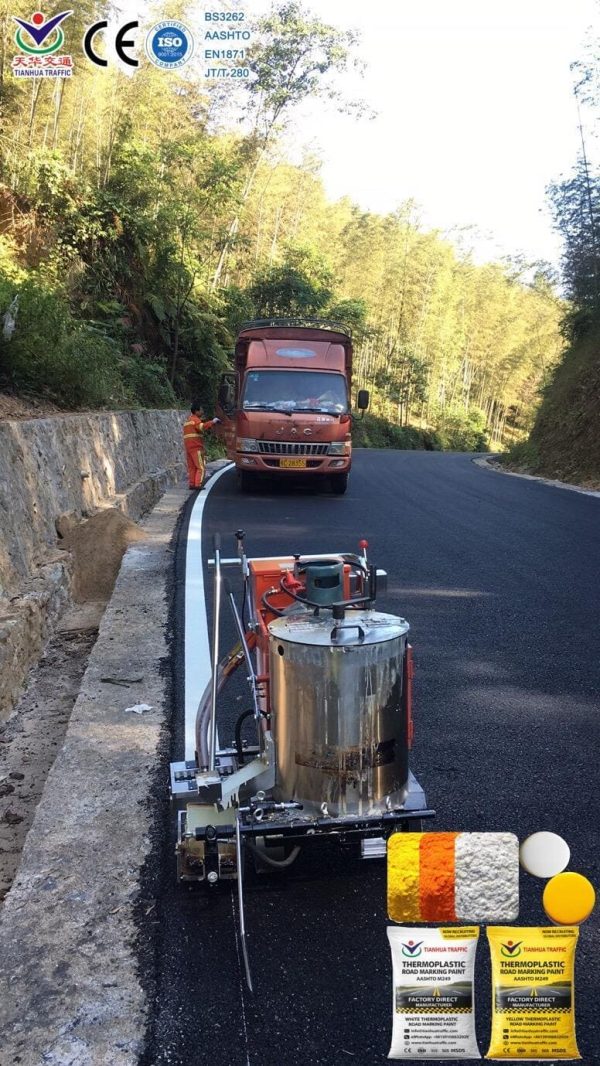
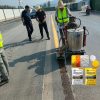
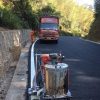
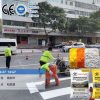
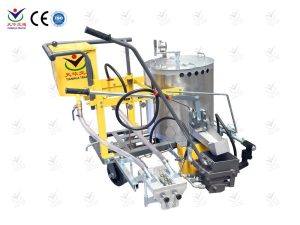
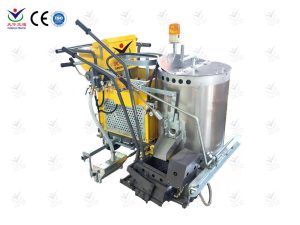
Construction should be carried out by trained workers using professional road marking equipment. Depending on jobsite conditions, the material can be applied by spraying, screeding, extrusion, or manual screeding. The selected method should match the marking design, road surface, traffic condition, required thickness, project specification, and equipment available at the jobsite.
Application Temperature
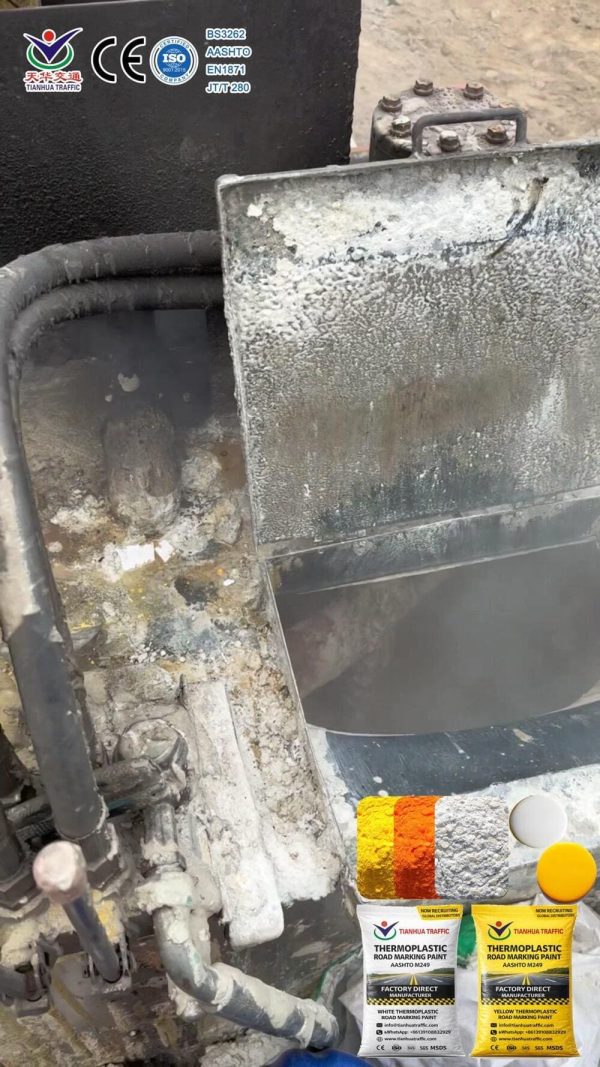
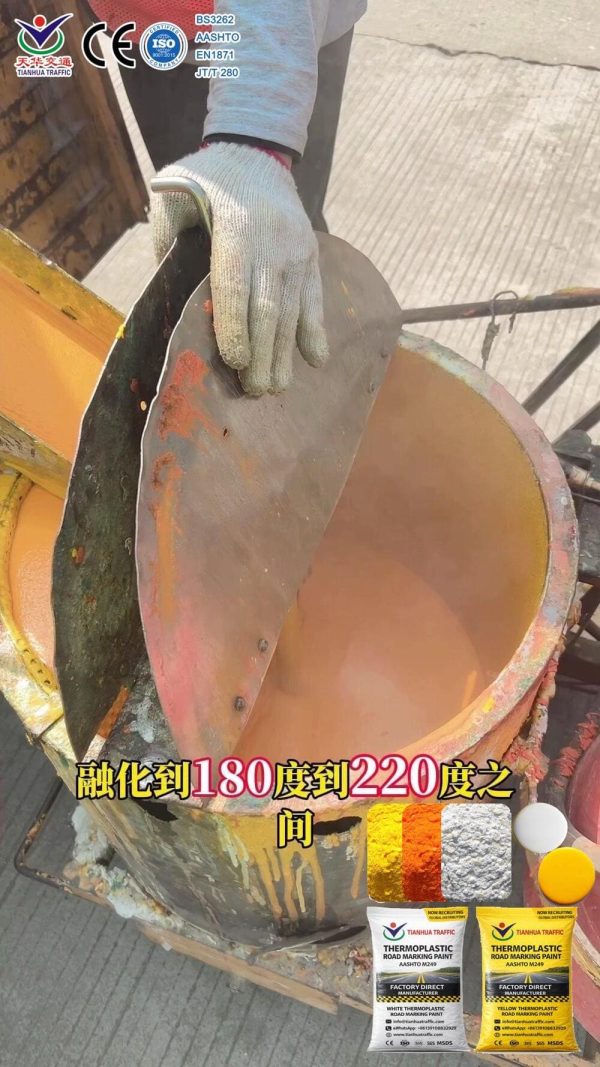
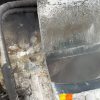
The material is normally heated to an application temperature of 180°C to 200°C. The maximum temperature should not exceed 230°C. Overheating may affect material color, flow performance, glass bead retention, and final marking quality, so temperature control during melting and application is important.
Thickness and Consumption
The common marking thickness is 1.5–3.0 mm, with 2.0 mm generally recommended. Depending on the application method, thickness, and pavement condition, the consumption is approximately 3–5 kg per square meter. Actual consumption should be confirmed according to road texture, line width, application equipment, and project requirements.
Storage and Handling
Store the product in a cool, dry, and well-ventilated place. Package stacking should not exceed 12 layers. During storage and handling, avoid moisture, incompatible materials, overheating, and direct sunlight. Improper storage conditions may cause discoloration, serious hardening, or other quality problems. The product should be used within 12 months from the production date.
For Papua New Guinea buyers, warehouse moisture control is especially important because of the tropical climate and frequent rainfall in many areas. Bags should not be stored directly on wet ground, near leaking roofs, beside open doors exposed to rain, or under long-term direct sunlight. If the product is stored before a project starts, the warehouse should be dry, clean, and protected from water ingress.
Transport and handling operators should follow the product Safety Data Sheet, also known as SDS, and local workplace procedures. When handling thermoplastic road marking paint, suitable protective equipment and good industrial hygiene practices are recommended.
Why Choose Tianhua Group
Factory-Direct Supply for Papua New Guinea Importers
Tianhua Group is a real source manufacturer, helping Papua New Guinea buyers reduce unnecessary trading layers and obtain stable factory supply. Direct factory communication makes it easier to discuss formula, packaging, color requirements, technical parameters, delivery schedule, and project needs.
Formula Support for Wet, Coastal, and Mountain Conditions
For Papua New Guinea projects, formala selection may need to consider heat, humidity, rainfall, coastal moisture, mountain roads, asphalt or concrete pavement, traffic load, and application equipment. Tianhua Group can discuss adjustments for adhesion, wear resistance, anti-cracking performance, glass bead retention, and night visibility.
Support for Project Specification Discussion
Papua New Guinea buyers may need to follow Department of Works requirements, tender documents, consultant specifications, donor-funded project documents, or contractor technical documents. Tianhua Group can communicate with buyers according to project requirements such as color, thickness, application temperature, glass bead performance, packaging, and applicable standards.
OEM Packaging and Local Distributor Branding
Tianhua Group supports OEM packaging, private label, customized bags, neutral bags, English bags, and distributor branding. This is suitable for Papua New Guinea importers, wholesalers, traffic safety product suppliers, road marking contractors, and local construction material brands.
Free Samples for Product Testing
Free samples are available for qualified customers to test color, melting performance, adhesion, glass bead compatibility, and construction effect. Sample testing is helpful before placing container orders or developing a new distribution channel.
Export and Remote Project Supply Planning
Papua New Guinea buyers may need to consider port selection, inland delivery, remote project sites, warehouse conditions, and contractor stock planning. Tianhua Group can help discuss order size, packaging, shipping terms, sample shipment, and container loading based on the buyer’s project plan.
Stable Production and Quality Control
Stable production capacity and reliable quality control help customers maintain repeat orders and long-term supply. Consistent quality is important for distributors and contractors who need reliable performance across multiple road marking projects.
Export Experience in 80+ Countries and Regions
Tianhua Group serves customers in more than 80 countries and regions, with experience in international project supply, distributor cooperation, OEM packaging, shipping documentation, and long-term export service.
Looking for Distributors, Agents and Local Partners in Papua New Guinea
Tianhua Group is looking for distributors, agents, project partners, local wholesalers, and road marking material suppliers in Papua New Guinea. We welcome long-term cooperation with companies or individuals who have road project resources, government project channels, contractor networks, construction material distribution experience, or traffic facility customer resources.
Cooperation options may include regular distribution, project-based supply, OEM branding, local wholesale, joint-venture opportunities, and long-term supply agreements. For qualified partners, Tianhua Group can discuss pricing support, sample support, technical communication, product selection, and market development assistance.
Middleman commission is also available for suitable business opportunities. If you can introduce road contractors, importers, distributors, traffic safety companies, infrastructure project buyers, or construction material channels in Papua New Guinea, you are welcome to contact Tianhua Group for cooperation details.
Our goal is to build practical and stable cooperation in the Papua New Guinea market. We prefer partners who understand local procurement, project specifications, contractor supply, product testing, port logistics, inland delivery, and long-term road marking material business.
FAQ
What affects the thermoplastic road marking paint price in Papua New Guinea?
The price is affected by raw materials, color formula, order quantity, packaging, glass bead requirements, shipping route, destination port, inland delivery, OEM needs, and project standards. Please contact Tianhua Group with your requirements for an accurate quotation.
Do you supply 25kg white and yellow road marking paint?
Yes. Tianhua Group supplies 25kg per bag thermoplastic road marking paint in white and yellow. Other packaging, color tone, or formula requirements can be discussed for OEM or project orders.
Can I get a free sample before bulk ordering?
Yes. Free samples are available for qualified customers. Buyers can test melting performance, color, adhesion, glass bead compatibility, and construction effect before placing a bulk order.
Do you support OEM packaging for Papua New Guinea distributors?
Yes. Tianhua Group supports OEM bags, private label packaging, neutral packaging, English packaging, and customized distributor branding for Papua New Guinea buyers.
Can the formula be customized for Papua New Guinea climate?
Yes. The formula can be discussed according to Papua New Guinea’s tropical climate, wet season, humidity, road surface type, traffic load, application method, glass bead requirement, and project specification.
Which standard should Papua New Guinea buyers use?
Buyers should first follow the actual tender document, Department of Works requirement, project engineer’s instruction, consultant specification, or project owner standard. AASHTO M249, BS 3262, JT/T 280, Austroads-related requirements, or Australian Standards may be discussed when requested by a specific project or buyer.
What is the recommended application temperature?
The recommended application temperature is normally 180°C to 200°C. The maximum temperature should not exceed 230°C to avoid possible quality issues caused by overheating.
How many kilograms are needed per square meter?
Consumption is usually about 3–5 kg per square meter, depending on line thickness, pavement texture, application method, and construction conditions. A 2.0 mm thickness is commonly recommended.
How should the product be stored in Papua New Guinea?
Store the product in a cool, dry, and well-ventilated place. Avoid moisture, direct sunlight, overheating, and incompatible materials. Package stacking should not exceed 12 layers, and the product should be used within 12 months from the production date.
Can Tianhua Group export to Papua New Guinea?
Yes. Tianhua Group can support export orders to Papua New Guinea through suitable logistics routes, including sample orders, mixed orders, less-than-container shipments, and full container shipments. Shipping details can be discussed according to destination port and order quantity.
Are you looking for distributors or agents in Papua New Guinea?
Yes. Tianhua Group is looking for distributors, agents, project partners, local wholesalers, and traffic safety product suppliers in Papua New Guinea. Joint-venture cooperation and middleman commission can also be discussed.
What information is needed to get a quotation?
Please provide the required color, quantity, packaging type, destination port, project location, application method, marking thickness, glass bead requirement, applicable standard, and whether OEM packaging or custom formula is needed.
Request a Quote from Tianhua Group
Looking for thermoplastic road marking paint for sale in Papua New Guinea? Contact Tianhua Group or TIANHUA TRAFFIC to request a factory price, ask for a free sample, discuss OEM packaging, or develop distributor cooperation in Papua New Guinea. We also welcome joint-venture opportunities, local agent cooperation, project-based supply, and commission-based middleman cooperation.
Send your required quantity, color, destination port, project location, packaging style, project standard, and application details today. Tianhua Group will help you choose suitable 25kg white and yellow thermoplastic road marking paint for your Papua New Guinea road marking project.
MD –
Coastal storage was a concern for us because of humidity and rainfall. The bags were kept covered and dry before application, and the material melted smoothly when used. For coastal roads and port-area markings, packaging and storage conditions are just as important as the paint formula.
Luigi –
We used the white thermoplastic paint for lane lines and pedestrian crossings in Port Moresby. The white color looked clear on dark asphalt, especially after glass beads were applied. Because traffic control time was limited, the fast drying performance helped us complete the work without long road closure.
Iftach –
We tested the yellow thermoplastic paint on a mountain road section with curves and warning lines. The product performed well, but road surface preparation was very important because the pavement had dust and moisture in some areas. After cleaning and drying, the line bonded much better.
Nicola –
The paint was used around an industrial and logistics yard where trucks move frequently. We paid attention to line thickness, glass bead adhesion, and wear resistance instead of only looking at the lowest price. The finished markings looked strong after the correct heating temperature was maintained.
Parikchhit –
For our project, Lae Port was more suitable than Port Moresby because the cargo needed to go toward the Highlands. The 25kg bags were practical for unloading, warehouse storage, and later delivery to contractors. Buyers in PNG should consider the full delivery route, not only the factory price.
Sanjay –
We needed white and yellow thermoplastic paint for road safety markings near a school zone and local access road. The material was suitable for stop lines, edge lines, arrows, and pedestrian crossings. For PNG projects, having sample support before bulk ordering is helpful because road conditions can vary a lot between coastal and highland areas.