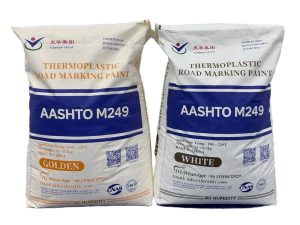
Thermoplastic road marking paint white yellow is commonly used for traffic line marking projects that require clear color identification, durable pavement adhesion, and reliable visibility. White and yellow are the main colors for road markings, helping guide vehicles, divide traffic lanes, identify pedestrian areas, and improve road safety on different pavement surfaces.
White thermoplastic road marking paint is often used for lane lines, edge lines, crosswalks, arrows, stop lines, parking spaces, and guide markings. It provides high brightness and clear contrast on asphalt roads, concrete pavement, parking lots, city streets, and traffic control areas.
Yellow thermoplastic road marking paint is mainly used for center lines, no-parking lines, restricted areas, bus lanes, warning zones, road edges, and special traffic guidance markings. The yellow color helps drivers recognize separation lines and traffic control information more quickly, especially in busy road sections.
White and yellow colors available for different traffic marking applications
Suitable for highways, city roads, parking lots, factories, airports, and public roads
Used for lane lines, center lines, edge lines, stop lines, arrows, and crosswalks
Hot melt application for stronger adhesion and better wear resistance
Can be used with reflective glass beads for improved night visibility
Compatible with thermoplastic screed, spray, and extrusion marking machines
The quality of white and yellow thermoplastic marking paint depends on the formula balance, resin quality, pigment stability, filler ratio, softening point, melting flow, and glass bead retention. A suitable formula can help create smooth lines, clean edges, strong pavement bonding, and long-lasting color performance after construction.
For road contractors, distributors, and traffic safety projects, white and yellow thermoplastic road marking paint can be supplied according to local standards and application needs. Product options may include different colors, formulas, packaging, glass bead content, drying performance, and project-specific marking requirements.