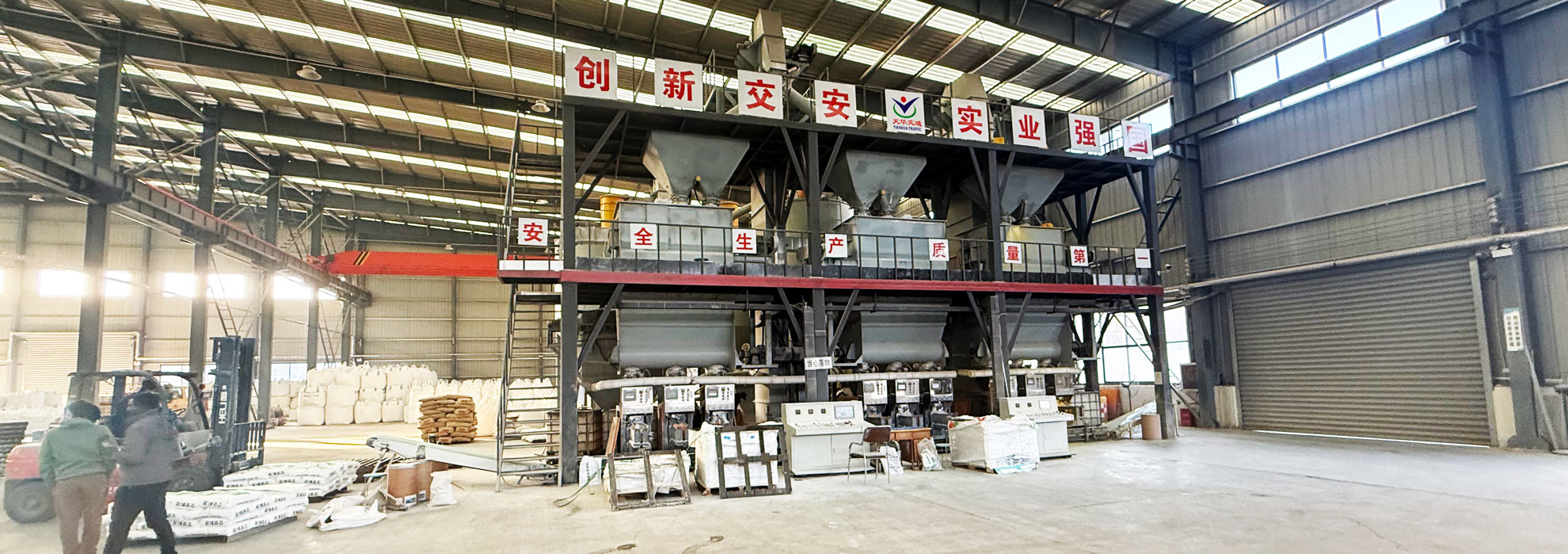
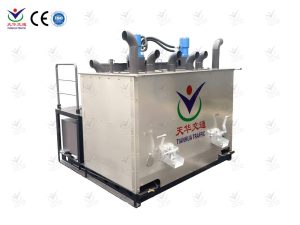
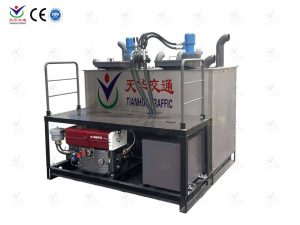
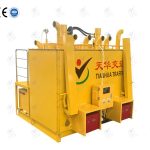
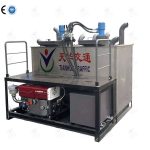
Hot melt kettle cost becomes meaningful only when buyers look beyond the purchase figure and examine what the machine contributes to daily road marking output. In thermoplastic work, the kettle is not just a container for melted material. It is the equipment that determines how efficiently thermoplastic is prepared, how steadily it is held at working condition, and how smoothly the marking crew can maintain progress across a full shift. A kettle that looks inexpensive at the quotation stage can become costly very quickly if it heats slowly, consumes excess fuel, or interrupts the flow of the entire operation.
That is why experienced buyers usually compare hot melt kettle cost through a productivity lens. They want to understand how capacity, burner performance, insulation quality, steel structure, discharge efficiency, and operating safety translate into real jobsite value. On highways, urban arterial roads, airport markings, industrial compounds, and parking projects, the kettle has a direct effect on crew rhythm, material readiness, and the overall economics of thermoplastic construction. Cost is therefore closely tied to output and reliability, not just to equipment size.
Tianhua Traffic helps buyers evaluate hot melt kettle cost in relation to actual working performance and long-term commercial return. For contractors, distributors, and project procurement teams, the better investment is often the kettle that supports faster melting, steadier operation, and fewer avoidable stoppages over time. In professional road marking, controlling cost is not only about spending less at the beginning. It is about choosing equipment that keeps production stable, protects efficiency, and delivers stronger value over the life of the machine.