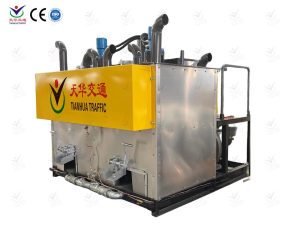
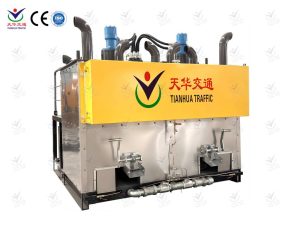
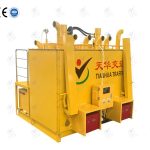
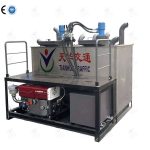
Dual-fuel hot melt kettle price is best understood as a decision about operating flexibility, not just equipment cost. Buyers searching this term are usually comparing kettles for serious thermoplastic road marking work, where fuel choice can affect continuity on site, daily operating expense, and the ability to keep production moving when one energy source is less practical or less economical. In that context, price is shaped not only by kettle size, but by burner system design, fuel-switching capability, heating efficiency, structural quality, insulation performance, and the machine’s suitability for sustained field use.
What makes this category commercially important is that dual-fuel capability can change how a crew manages real project conditions. On highways, municipal roads, airport surfaces, industrial compounds, and large parking projects, contractors often work across sites with different fuel availability, cost structures, and time pressures. A lower-priced kettle may look attractive on paper, but if it lacks stable thermal performance or practical fuel adaptability, the savings can disappear quickly through downtime, slower melting, or higher operating friction. That is why experienced buyers compare price alongside output stability, ease of operation, maintenance practicality, and long-term return in the field.
Tianhua Traffic helps buyers look at dual-fuel hot melt kettle price from a more useful angle: how much flexibility, reliability, and production value the machine actually delivers after purchase. For contractors, distributors, and project procurement teams, the stronger option is often the kettle that supports smoother fuel management, steadier thermoplastic preparation, and more predictable jobsite performance over time. In professional road marking work, real price advantage comes from operational resilience as much as from the quotation itself.