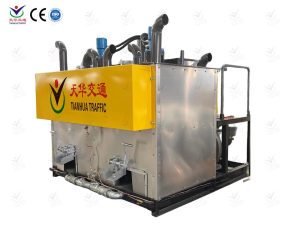
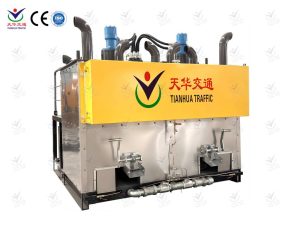
Dual-fuel hot melt kettle cost should be judged as a total operating question, not just as a purchase number on a quotation sheet. Buyers searching this term are usually trying to understand whether the added flexibility of a dual-fuel system creates real value in daily thermoplastic work. In many road marking projects, the answer is yes — because fuel choice can affect melting continuity, site adaptability, energy cost control, and the ability to keep crews productive when supply conditions change from one job to another.
This is what makes cost analysis in this category different from ordinary kettle comparison. A single-fuel machine may appear cheaper at the start, but that advantage can narrow quickly if the crew faces fuel limitations, inefficient heating, or unnecessary downtime. Contractors working on highways, municipal corridors, airport pavements, industrial traffic areas, and large parking projects often need equipment that can adapt to different operating realities without slowing production. In that environment, dual-fuel capability becomes part of the machine’s economic value, especially when buyers are comparing long-term output, fuel management, melting stability, and overall field reliability.
At Tianhua Traffic, dual-fuel hot melt kettle cost is viewed in relation to what the machine helps protect over time: project continuity, heating efficiency, operational flexibility, and smoother thermoplastic preparation under real site conditions. For buyers planning equipment investment, resale, or fleet deployment, the smarter cost decision is often the one that reduces risk after purchase. A well-built dual-fuel kettle is not only a melting unit. It is a more adaptable production asset for road marking teams that need stable performance across changing conditions.