
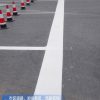
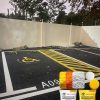
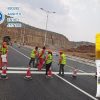
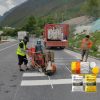


Description
Thermoplastic Road Marking Paint Price in Chile
The thermoplastic road marking paint price in Chile depends on raw material cost, formula grade, color requirement, reflective glass bead configuration, packaging method, order quantity, shipping route, port charges, customs clearance, inland delivery distance, and local project requirements. For buyers in Santiago, Valparaíso, San Antonio, Concepción, Antofagasta, Iquique, or southern Chile, the final landed cost may vary because the country has a long coastline and different regional logistics routes.
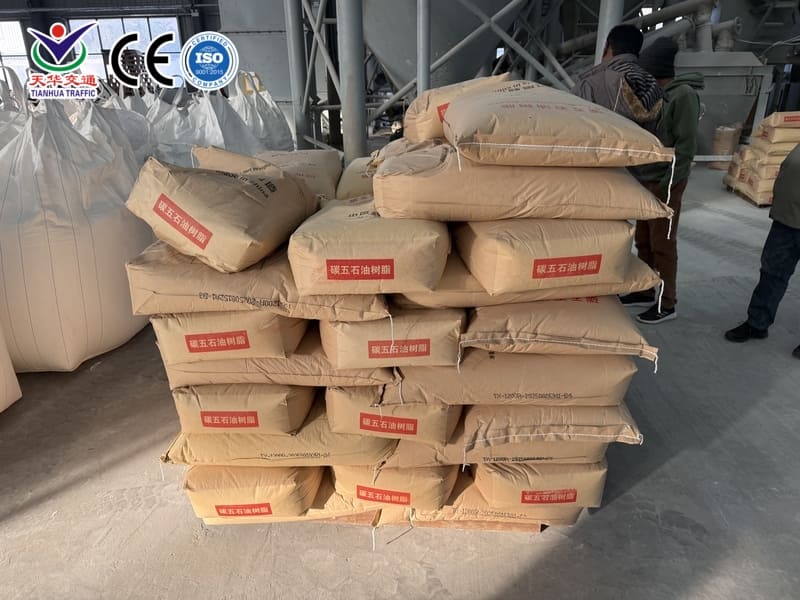
Raw materials are one of the main pricing factors. Resin, C5 petroleum resin, EVA or other modifiers, titanium dioxide for white paint, yellow pigments, fillers, additives, and reflective glass beads can all influence the quotation. White and yellow formulas may have different prices because pigment cost, color stability, weather resistance, and project requirements are not always the same.
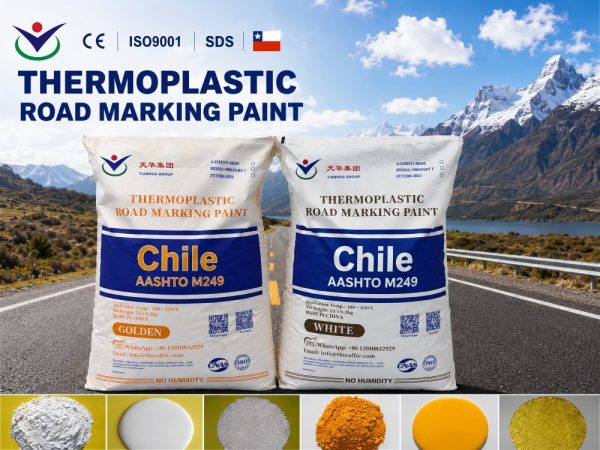
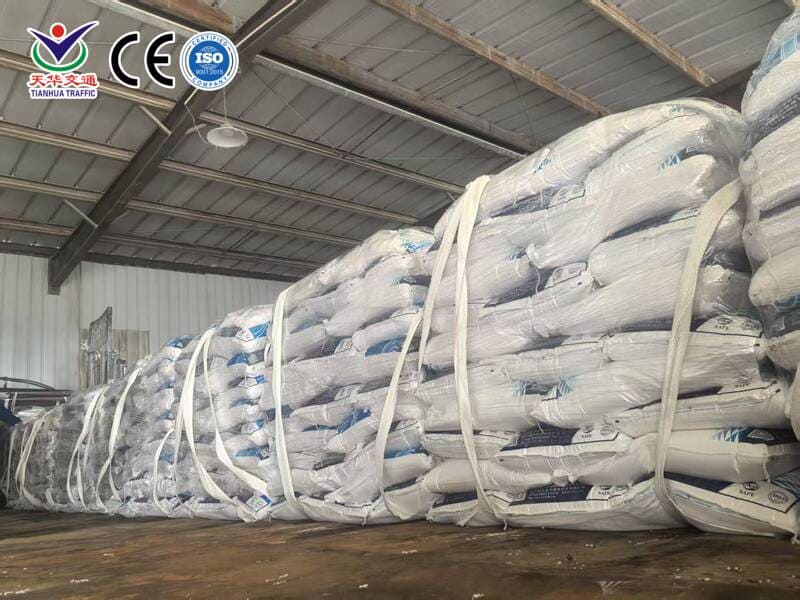
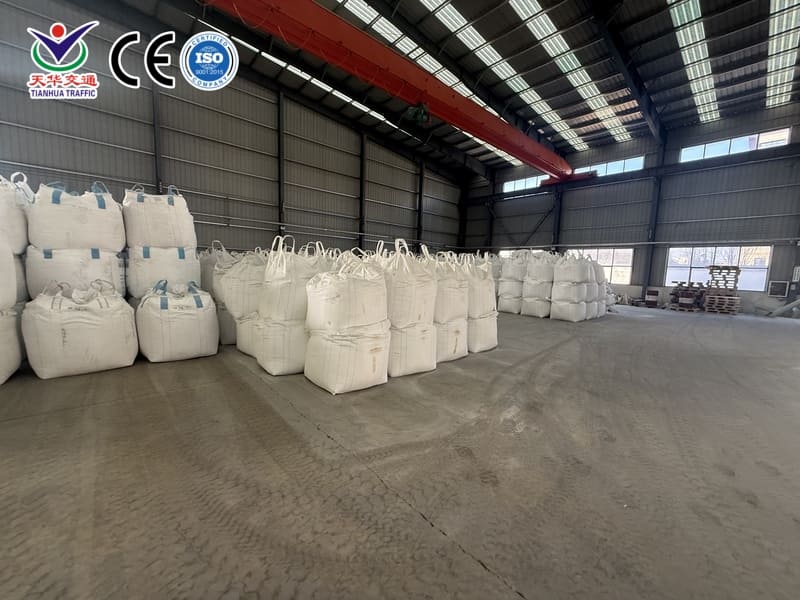
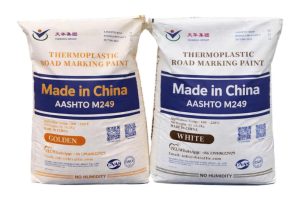
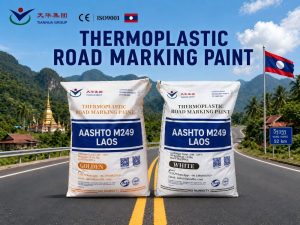
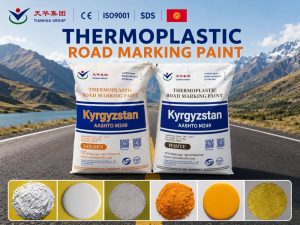
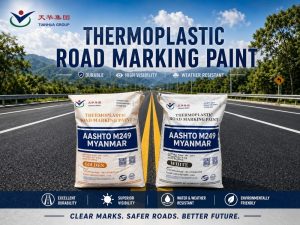
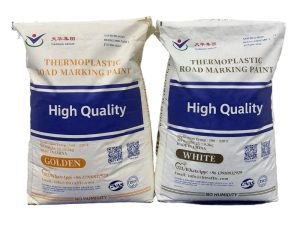
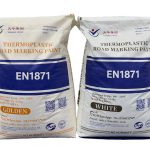
Packaging also affects the final cost. Tianhua Group normally supplies 25kg/bag packaging, which is convenient for container loading, port handling, warehouse storage, distributor stock, and onsite construction. If buyers need OEM bags, private label packaging, English packaging, Spanish packaging, neutral bags, or customized palletizing, the price may change according to printing design, packaging quantity, and order plan.
Order quantity has a direct impact on the unit price. Full container orders usually offer better factory cost and freight efficiency. LCL shipments are suitable for small stock preparation, while sample orders are useful for testing melting performance, color, adhesion, glass bead bonding, and construction effect before bulk purchasing.
Chile road projects may require different performance levels depending on central urban roads, coastal highways, port areas, mining roads, airports, parking facilities, southern rainy regions, or high-altitude Andean routes. OEM service and customized formulas may affect the price, but they can help buyers match local pavement, climate, application equipment, and tender requirements more accurately. For a precise quotation, Tianhua Group recommends sending the required color, quantity, destination port, destination city, standard, glass bead requirement, packaging needs, and expected delivery schedule.
Thermoplastic Road Marking Paint Calculator
Before purchasing, contractors and importers can estimate the approximate quantity needed by using our Thermoplastic Road Marking Paint Calculator. This calculator helps estimate hot melt road marking paint consumption based on project area, line width, line length, application thickness, and marking method. It is useful for project budgeting, tender preparation, distributor stock planning, and quotation discussion before placing an order.
Road Marking Paint Market in Chile
Chile is a practical market for road marking materials because of its long north-south road network, urban traffic demand, port logistics, mining-related transport, airports, industrial zones, parking facilities, bus corridors, school zones, pedestrian crossings, and road safety maintenance. Road markings are needed not only for highways and city streets, but also for access roads serving ports, warehouses, industrial plants, mining areas, and commercial facilities.
Typical buyers may include importers, road marking contractors, municipal road maintenance suppliers, government project suppliers, traffic safety companies, coating distributors, construction material wholesalers, and middlemen with project resources. Santiago is the largest commercial and administrative center, while Valparaíso and San Antonio are important for port-related supply, Antofagasta and Iquique are relevant for northern industrial and mining routes, and Concepción can serve central-southern demand.
For procurement standards in Chile, buyers should first follow the local tender document, project consultant specification, and the Chilean Manual de Señalización de Tránsito. This local manual should be treated as the primary reference for road marking layout, signs, colors, dimensions, and traffic safety requirements.
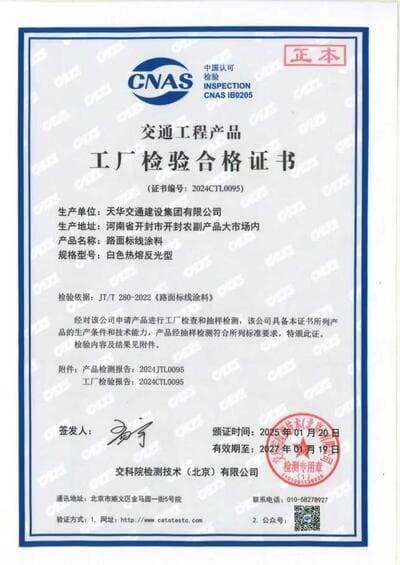
For imported thermoplastic road marking paint, AASHTO M249, BS3262, JT/T280, and EN1871 may be used as production, inspection, or comparison references depending on the project. AASHTO M249 is commonly used for white and yellow reflective thermoplastic striping materials. BS3262 is recognized in many international road marking specifications. JT/T280 is practical for China-manufactured pavement marking paint because Tianhua Group can use it for formula control, production inspection, and product matching. The best approach is to confirm the Chilean project requirement first, then match the formula and documents accordingly.
| Place of Origin | China (Mainland) | Main Raw Material | Petroleum Resin, Glass Beads & Titanium Dioxide |
|---|---|---|---|
| Product Name | Hot Melt Thermoplastic Road Marking Paint | State | Powder Coating |
| Color | White, Yellow, Orange or Custom | Standards | AASHTO, BS3262, JT/T280 or Custom Standards |
| Package | 25kg/bag | Port | Qingdao Port |
| Brand Name | Tianhua Traffic | Lifetime | 2-5 Years |
| Specific Gravity | 1.8-2.3 g/cm³ | Water Resistance | Great (in water for 24 hours) |
| Optional Colors | Yellow, Orange, Red, etc. | Alkali Resistance | Great (in saturated solution of calcium hydroxide for 24 hours) |
| Heating Temperature | 150°C-220°C | Glass Beads | 20% |
| Softening Point | 110°C | Fluidity | 40s |
| Coating Appearance | No wrinkles, dots, blisters, cracks, fall-out or stick to tyres | Coating Resistance | Resist -10°C for 4 hours |
| Drying Time | Within 3 minutes | thermal stability | Under 180°C-220°C for 4 hours |
| Chroma Performance | Reverse Material (White) | Material | C5 Petroleum Resin,Titanium Dioxide, CaCO3, Wax, Glass Beads, EVA, PE and so on |
| Compressive Strength | 26 MPa | Package Details | 25kg/bag, plastic woven bag. One 20’ container can load max. 26 tons. |
| Abrasive Resistance | 42 mg | Application | Road marking, straight line, dotted line, curve, arrow, letter, etc. |
Custom Thermoplastic Road Marking Paint for All International Standards
| Standards | Component | Specification | Test Result |
| AASHTO M249 Standard | Resin | ≥20% | 21% |
| Titanium Dioxide | ≥10% | 10.80% | |
| Glass Beads | ≥30% | 31% | |
| BS3262 Standard | Resin | ≥20% | 21% |
| Titanium Dioxide | ≥10% | 12% | |
| Glass Beads | ≥20% | 21% | |
| Chinese Standard | Resin | ≥15% | 16% |
| Titanium Dioxide | ≥5% | 8% | |
| Glass Beads | ≥20% | 21% |
Main Ports and Import Options for Chile
Chile has multiple Pacific ports, and the best import option depends on destination city, shipping schedule, inland delivery cost, and buyer warehouse location. San Antonio and Valparaíso are commonly used for central Chile and the Santiago market. For southern and central-southern distribution, San Vicente and Coronel may be considered depending on shipping line and logistics plan. For northern Chile, Iquique, Antofagasta, Mejillones, and Arica may be relevant for mining, industrial, and regional supply.
For China-origin thermoplastic road marking paint, importers often compare ocean freight, port charges, customs clearance, inland trucking, and warehouse delivery before confirming the route. San Antonio is often practical for Santiago-area distribution, while Valparaíso can also serve central Chile. For northern projects near mining or industrial corridors, northern ports may help reduce inland transport distance depending on cargo availability and freight schedule.
Tianhua Group can support full container orders, LCL shipments, and sample orders. A 20ft container with palletized loading can be planned around 27 tons in suitable conditions, for example about 18 pallets with 1.5 tons per pallet, depending on container payload, pallet method, shipping line rules, Chilean road weight limits, and local customs or transport requirements. Buyers should confirm the final loading plan before shipment.
For local market development, Santiago is a practical city for distributor coordination, government project communication, national sales management, and stock planning. Valparaíso and San Antonio are also suitable for port-related handling, while Antofagasta, Iquique, and Concepción may be useful for regional supply partners. Tianhua Group welcomes Chile dealers, agents, or representative-style partners to support sample handling, local communication, distributor stock planning, and project follow-up.
Common import scenarios include customs clearance, distributor warehouse stock, road contractor project supply, port-area maintenance, airport service road marking, mining and industrial zone traffic marking, municipal road maintenance, tender sample preparation, and seasonal stock before repainting work. We can provide commercial invoice, packing list, product information, sample documents, and shipping coordination support according to the buyer’s order terms.
Local Climate, Temperature and Rainy Season Considerations
Chile has very different climate zones from north to south. Northern Chile is arid and sunny, central Chile has a Mediterranean climate with dry summers and wetter winters, and southern Chile has cooler conditions with more frequent rainfall. Coastal regions may also face humidity and salt air, while Andean and high-altitude routes can experience lower temperatures and stronger temperature variation.
Rainy season conditions are especially important in central and southern Chile. In central areas, rainfall is more common during the winter months, while the south can have longer wet periods. Road marking work should be scheduled when pavement is clean and dry. Hot melt road marking paint should not be applied on wet pavement because moisture can reduce adhesion, cause bubbles or peeling, and shorten service life.
In northern desert and mining areas, strong sunlight, dry air, dust, and high pavement temperature may affect color retention, surface hardness, glass bead retention, and long-term retroreflectivity. In coastal cities, humidity and salt air may require attention to weather resistance and storage conditions. In colder or rainy southern areas, contractors should pay special attention to pavement dryness, primer use on old surfaces, and proper heating control.
Tianhua Group can customize formulas for Chile project conditions. Depending on the application area, we can improve UV resistance, weather resistance, moisture-related adhesion, anti-cracking performance, abrasion resistance, white/yellow color stability, melting flow, and night-time reflective performance when used with suitable glass beads.
Preferred Packaging for Chile Buyers
The preferred packaging for Chile buyers is 25kg/bag. This package is convenient for container loading, port handling, truck delivery, warehouse storage, distributor stock, and onsite construction. It is also easy for workers to handle during melting and application.
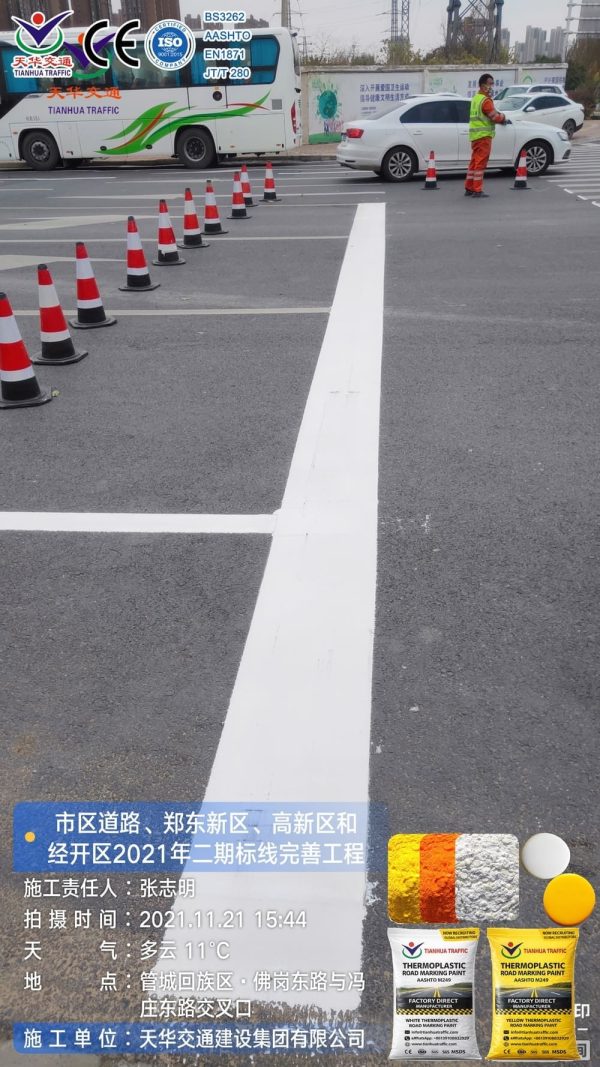
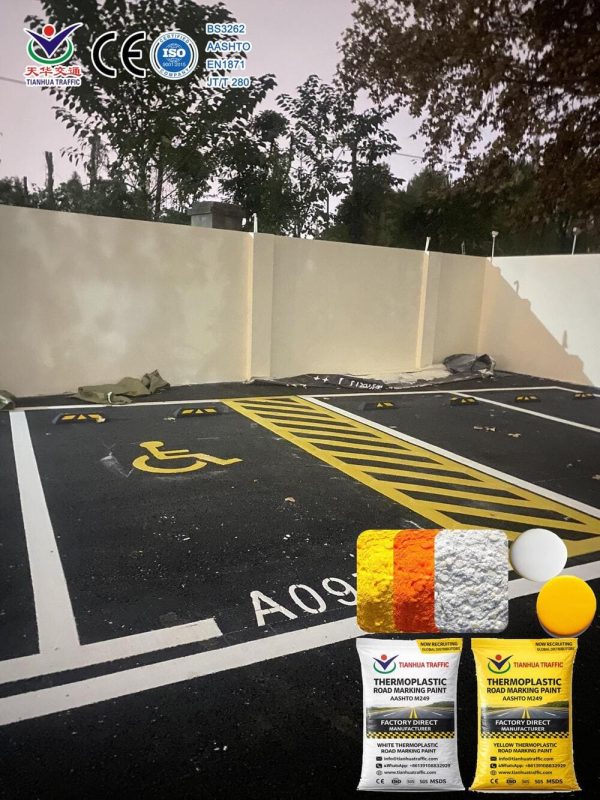
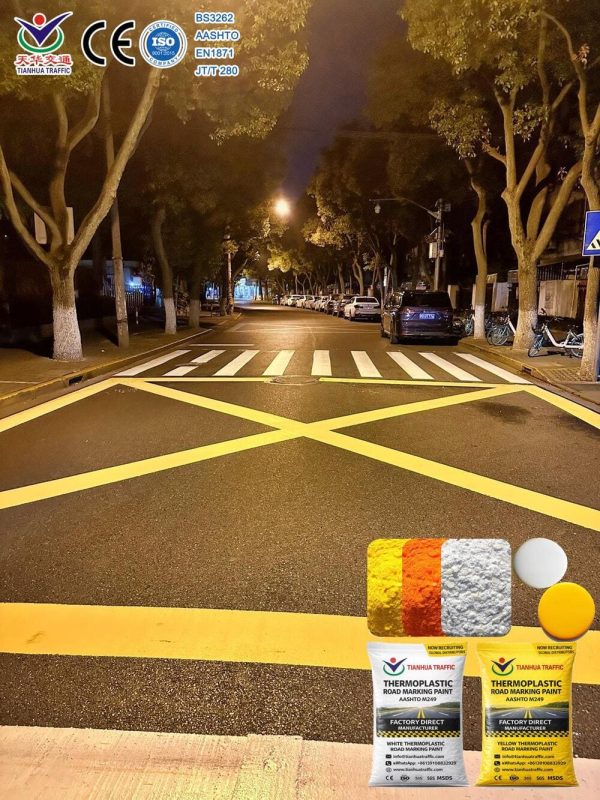
White and yellow thermoplastic road marking paint are available for lane lines, edge lines, center lines, pedestrian crossings, arrows, stop lines, parking lines, bus lanes, port-area markings, airport service roads, mining roads, and other traffic safety markings. Buyers can choose standard formulas or customized formulas according to pavement type, climate, application equipment, glass bead performance, and project standard.
Tianhua Group supports OEM packaging, English packaging, Spanish packaging, neutral packaging, customized bags, and distributor brand packaging. This is suitable for importers, wholesalers, road engineering contractors, traffic facility suppliers, and local coating or construction material distributors who want to develop their own brand or stock system in Chile.
- 25kg/bag standard export packaging
- White and yellow thermoplastic road marking paint
- OEM packaging and private label support
- English, Spanish, neutral, or distributor brand packaging
- Suitable for importers, wholesalers, contractors, distributors, and project suppliers
- Convenient for storage, transport, container loading, port handling, inland delivery, and onsite construction
- Can be supplied according to AASHTO M249 / BS3262 / JT/T280 / EN1871 requirements when applicable
- High retroreflectivity with suitable glass beads
- Strong adhesion
- Fast drying
- Long service life
- Factory direct price
Application Areas in Chile
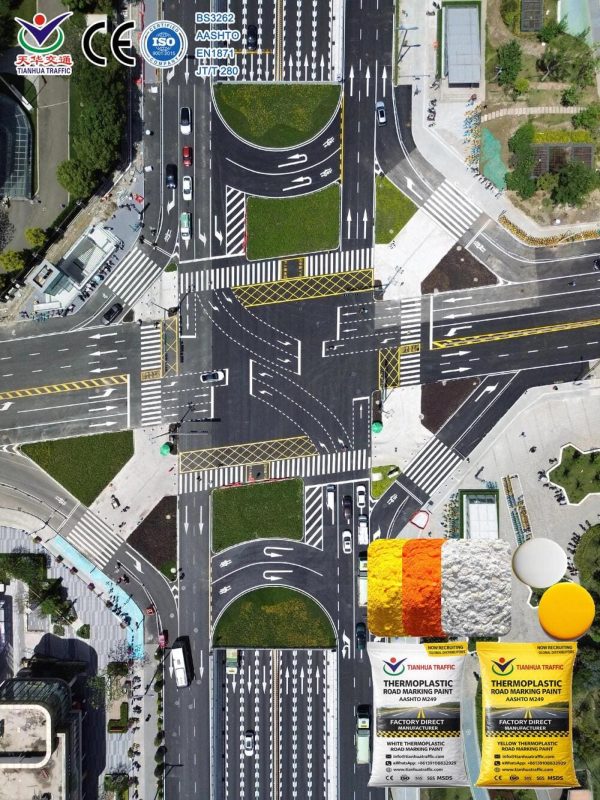
Tianhua thermoplastic road marking paint can be used in many typical traffic safety and road organization scenarios in Chile. It is suitable for asphalt and concrete pavement when the road surface is properly prepared and the correct construction method is used.
- Highways and intercity roads
- Urban roads in Santiago, Valparaíso, Concepción, Antofagasta, Iquique, La Serena, Temuco, and other cities
- Parking lots and commercial facilities
- Airports and airport service roads
- Seaport areas and logistics yards
- Mining roads, industrial zones, and factory roads
- School zones and pedestrian crossings
- Bus lanes and public transport routes
- Road safety projects, arrows, stop lines, zebra crossings, edge lines, and lane markings
Similar project requirements may also appear in nearby Latin American markets with coastal humidity, mining roads, strong sunlight, mountain routes, rainy southern regions, and port logistics. Tianhua Group can recommend suitable formulas for contractors, distributors, and project suppliers serving Chile and surrounding regional markets.
Professional Application Methods for Thermoplastic Road Marking Material
Thermoplastic road marking material can be applied by different professional methods according to road type, marking design, traffic condition, required thickness, reflectivity target, and equipment availability. The main methods include screed application, spray application, extrusion application, and profiled or structured markings such as raised dots and block patterns.
Screed Application
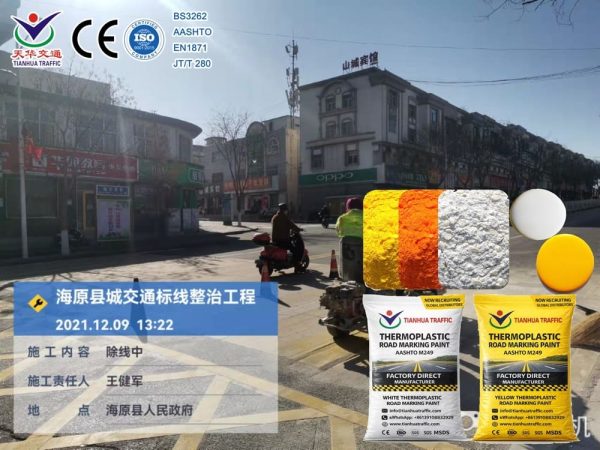
Screed application is one of the most common methods for standard flat thermoplastic markings. The melted material flows into a screed shoe and is applied at a controlled width and thickness. It is suitable for lane lines, edge lines, parking lines, pedestrian crossings, arrows, and general road safety markings. This method usually provides stable line edges, good thickness control, and reliable construction efficiency.
Spray Application
Spray application uses professional thermoplastic spray equipment to apply hot material in a thinner and more uniform layer. It is suitable for projects that require faster application speed, smoother appearance, or lower material consumption compared with thick screed markings. Spray thermoplastic normally requires proper temperature control, suitable material flow, and compatible glass bead application to achieve good reflectivity.
Extrusion Application
Extrusion application pushes melted thermoplastic through an extrusion shoe or die to form a controlled line profile. It is suitable for thicker markings, durable road lines, and projects requiring strong wear resistance. Extruded markings can provide consistent thickness and good durability when the pavement is properly prepared and construction temperature is controlled.
Profiled, Dotted, and Block Raised Markings
Profiled or structured thermoplastic markings include raised ribs, dots, blocks, and other patterned profiles. These markings can improve visibility in wet or night conditions and may provide audible or tactile warning when vehicles pass over them. They are often used for edge lines, lane separation, warning zones, and road safety areas. The design should match local standards, traffic speed, pavement condition, and equipment capability.
Application Method and Construction Guidelines
Pavement Preparation
The road surface should be clean, dry, and free from dust, oil, mud, loose particles, and other contaminants. Proper surface preparation is essential for improving adhesion and long-term performance.
For new asphalt pavement, primer is usually not required when the surface is clean, dry, and suitable for direct bonding. For old pavement, repainting work, aged asphalt, concrete surfaces, or dusty surfaces, applying a proper primer is recommended to help the marking bond more firmly to the road surface. The final primer decision should depend on pavement condition, surface porosity, dust level, moisture level, and project specification.
Application Method
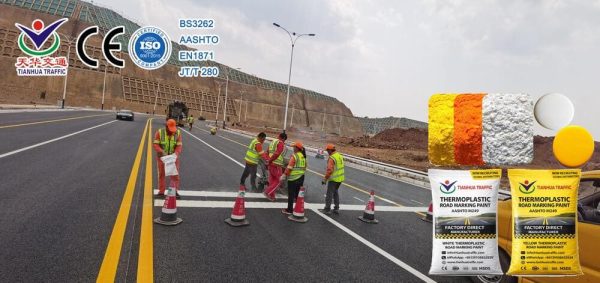
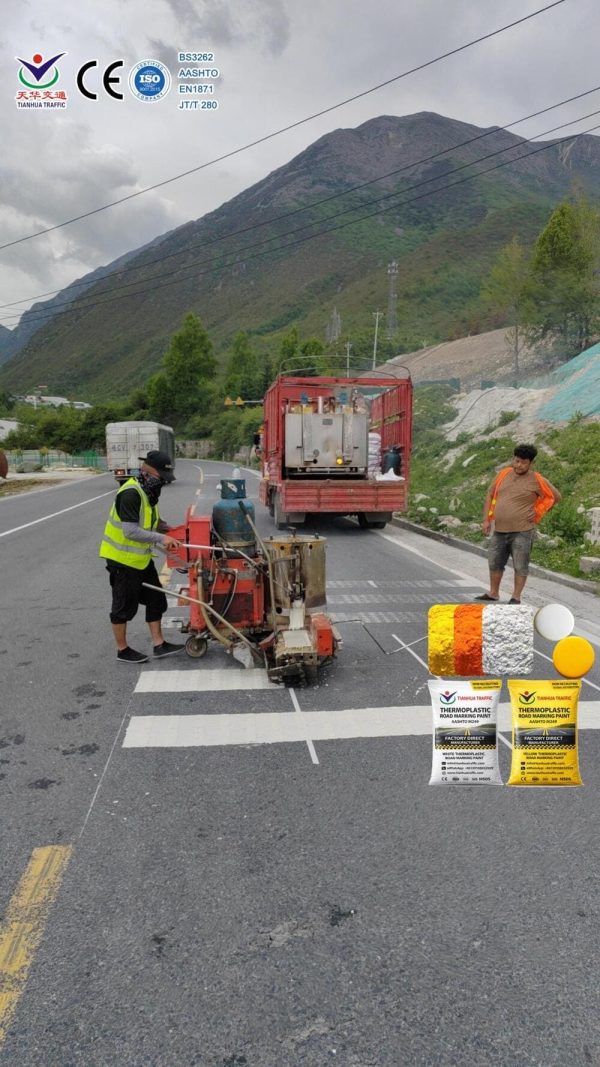
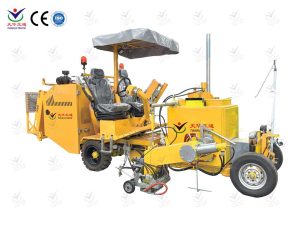
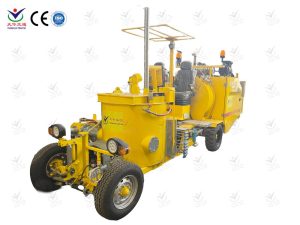
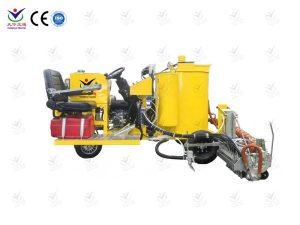
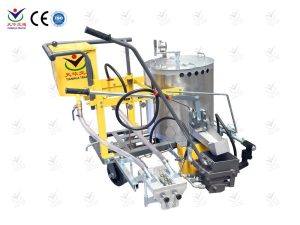
Construction should be carried out by trained workers using professional road marking equipment. Depending on jobsite conditions, the material can be applied by spraying, screeding, extrusion, or manual screeding. Contractors should choose the method according to line type, pavement condition, required thickness, project standard, traffic management plan, and available equipment.
Application Temperature
The material is normally heated to an application temperature of 180°C to 200°C. The maximum temperature should not exceed 230°C. Overheating may affect color, flow, adhesion, glass bead bonding, and final marking quality.
Thickness and Consumption
The common marking thickness is 1.5–3.0 mm, with 2.0 mm generally recommended. Depending on the application method, thickness, and pavement condition, the consumption is approximately 3–5 kg per square meter.
Storage and Handling
Store the product in a cool, dry, and well-ventilated place. Package stacking should not exceed 12 layers. During storage and handling, avoid moisture, incompatible materials, overheating, and direct sunlight. Improper storage conditions may cause discoloration, serious hardening, or other quality problems. The product should be used within 12 months from the production date.
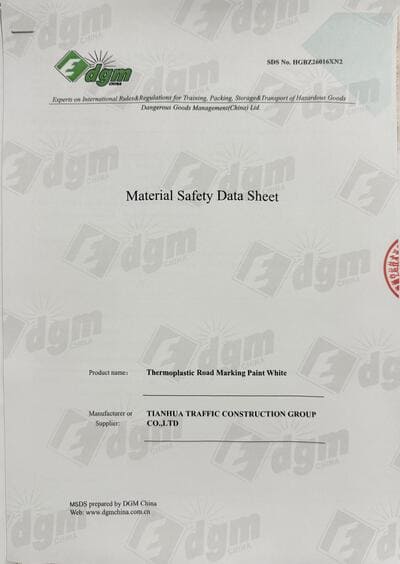
Transport and handling operators should follow the product Safety Data Sheet (SDS) and local workplace procedures. When handling thermoplastic road marking paint, suitable protective equipment and good industrial hygiene practices are recommended.
Why Choose Tianhua Group
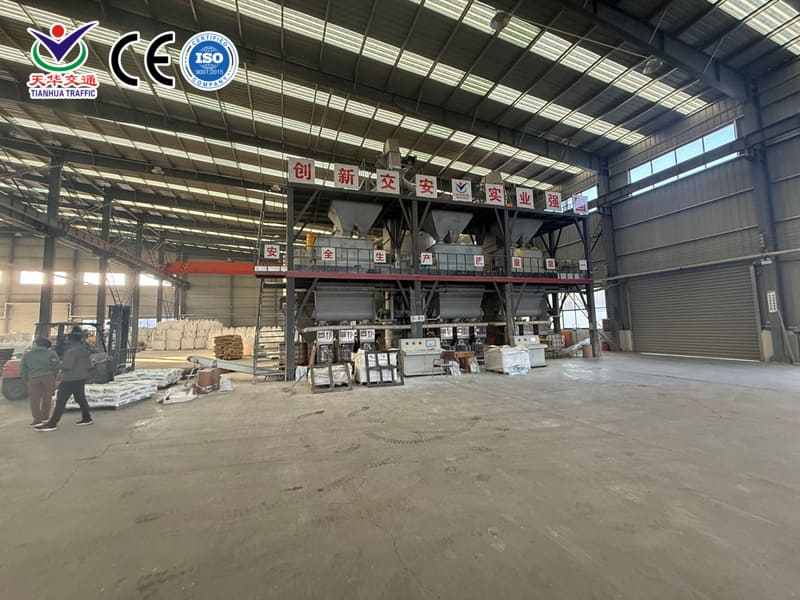
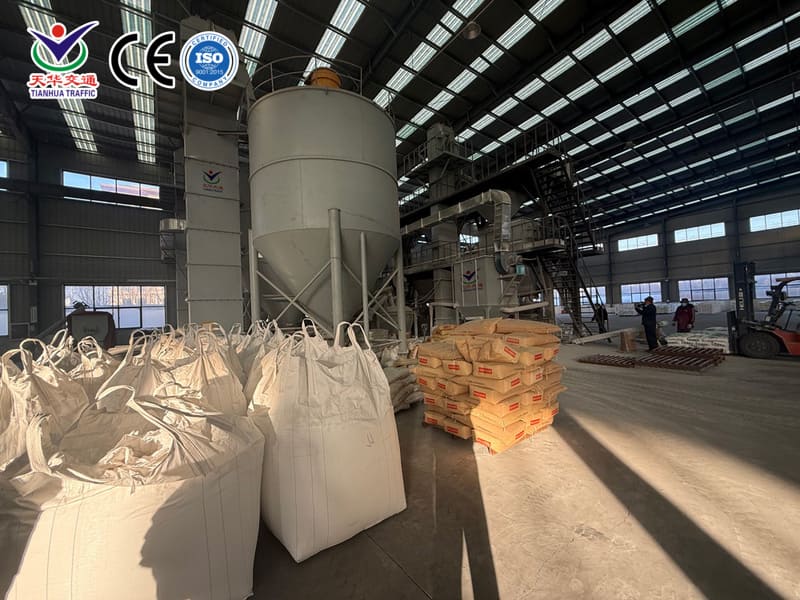
Tianhua Group, also known as TIANHUA TRAFFIC, is a source manufacturer of thermoplastic road marking paint established in 2017. With automated production lines, OEM experience, stable production management, and an annual production capacity of 50,000 tons, we support long-term supply for importers, contractors, distributors, and project suppliers.
- Real source manufacturer: Tianhua Group helps buyers reduce trading layers and obtain stable factory supply from the source.
- OEM support: We support OEM packaging, private label bags, customized bags, neutral packaging, and distributor branding.
- Custom formula: Formulas can be adjusted according to climate, road surface, application method, color requirement, glass bead performance, and project standards.
- Free samples: Free samples are available for qualified customers to test color, melting performance, adhesion, flow, and construction effect.
- Professional after-sales service: We provide technical guidance, application suggestions, product selection support, and after-sales communication.
- Stable production and quality control: Automated production lines and quality inspection help customers maintain repeat orders and long-term supply.
- Export experience: Tianhua Group serves customers in more than 80 countries and regions, including the Middle East, Africa, Southeast Asia, Central Asia, and South America.
- Flexible cooperation model: We support direct factory supply, distributor cooperation, OEM brand development, sample testing, project quotation, and long-term supply planning.
Looking for Distributors, Agents and Local Partners in Chile
Tianhua Group is looking for distributors, agents, project partners, local wholesalers, and road marking material suppliers in Chile. We welcome cooperation with companies and individuals who have government project resources, road engineering channels, building material distribution networks, traffic facility customers, port logistics contacts, mining and industrial zone channels, or contractor relationships.
We are open to long-term supply cooperation, distributor agreements, OEM brand cooperation, joint venture opportunities, and local market development. For suitable partners, Tianhua Group can provide sample support, product information, quotation support, packaging customization, technical communication, and market support materials.
Middleman commission cooperation is also available for qualified project introductions. If you have access to road contractors, municipal maintenance teams, infrastructure projects, traffic safety companies, port logistics areas, airport service contractors, mining-related road projects, or coating distribution channels in Chile, please contact Tianhua Group to discuss a practical cooperation model.
FAQ
What affects the thermoplastic road marking paint price in Chile?
The price is affected by raw materials, formula standard, white or yellow color, glass bead requirement, packaging, order quantity, OEM design, shipping route, port charges, customs clearance, inland delivery distance, and final project location.
Do you supply 25kg bags white and yellow thermoplastic road marking paint?
Yes. Tianhua Group supplies 25kg bags white and yellow road marking paint for importers, contractors, distributors, government project suppliers, and traffic facility companies.
Can I get a free sample before bulk order?
Yes. Free samples are available for qualified customers who want to test melting performance, color, adhesion, flow, glass bead bonding, and construction effect before bulk ordering.
Do you support OEM packaging for Chile distributors?
Yes. We support OEM bags, private label packaging, Spanish packaging, English packaging, neutral bags, and customized distributor branding.
Can the formula be customized for Chile’s different climate zones?
Yes. The formula can be adjusted for northern desert conditions, central winter rainfall, southern wet regions, coastal humidity, mining roads, adhesion requirements, anti-cracking performance, color stability, and night-time reflectivity.
Which standard should Chile buyers choose?
Buyers should follow the Chilean project tender and Manual de Señalización de Tránsito first. Tianhua Group can also discuss JT/T280, AASHTO M249, BS3262, EN1871, or customized technical specifications according to the project.
Which port is better for importing road marking paint to Chile?
It depends on the destination. San Antonio and Valparaíso are often practical for central Chile and Santiago. Iquique, Antofagasta, Mejillones, or Arica may suit northern projects, while San Vicente or Coronel may suit central-southern distribution.
Can a 20ft container load 27 tons with pallets?
In suitable conditions, a 20ft container with palletized loading can be planned around 27 tons, such as about 18 pallets with 1.5 tons per pallet. The final plan should be confirmed based on container payload, pallet size, shipping line rules, and local transport limits.
What application method is suitable for standard road lines?
Screed application is commonly used for standard flat lines. Spray application can be used for thinner and faster marking, while extrusion and profiled markings are suitable for thicker or structured safety markings.
What is the recommended application temperature?
The normal application temperature is 180°C to 200°C. The maximum heating temperature should not exceed 230°C.
How many kilograms are needed per square meter?
For common thickness of 1.5–3.0 mm, consumption is usually about 3–5 kg per square meter, depending on pavement condition, application method, and final line thickness.
Should primer be used before application?
New clean asphalt pavement usually does not need primer. For old pavement, concrete surfaces, repainting work, or dusty surfaces, a suitable primer is recommended to improve bonding strength.
How should thermoplastic road marking paint be stored?
It should be stored in a cool, dry, and well-ventilated place. Avoid moisture, overheating, direct sunlight, and excessive stacking. The product should be used within 12 months from the production date.
Can Tianhua Group export to Chile?
Yes. Tianhua Group can support export supply to Chile through suitable ocean freight, container, LCL, and sample shipment options, with route planning based on destination port and inland delivery needs.
How do you help buyers reduce quality risk?
We support sample confirmation, formula communication, production control, batch inspection, packaging confirmation, and product document support. Buyers can also provide project specifications for technical matching before ordering.
What information is needed to get a quotation?
Please provide color, quantity, packaging requirement, destination port and city, required standard, glass bead requirement, application thickness, OEM needs, and expected delivery schedule.
Request a Price and Free Sample
Need thermoplastic road marking paint price in Chile? Contact Tianhua Group for a factory quotation, free sample request, OEM packaging discussion, custom formula support, distributor cooperation, joint venture opportunity, or middleman commission cooperation. Send us your required color, quantity, destination, standard, glass bead requirement, packaging needs, and estimated project volume, and our team will prepare a practical supply proposal for your market.
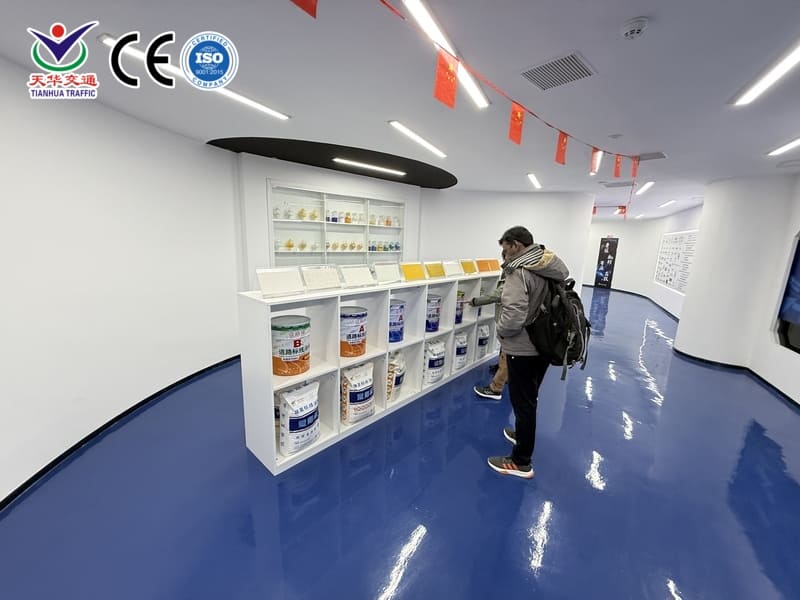 Thermoplastic road marking paint showroom China manufacturer
 Thermoplastic road marking paint shipping loading container export
 Thermoplastic road marking paint raw materials resin glass beads
 Thermoplastic road marking paint production line factory
 Thermoplastic road marking paint manufacturer China factory
 Thermoplastic road marking paint factory China supplier
 MSDS thermoplastic road marking paint safety data sheet
 Marine inspection report thermoplastic road marking paint export
 JT/T280 standard thermoplastic road marking paint China standard
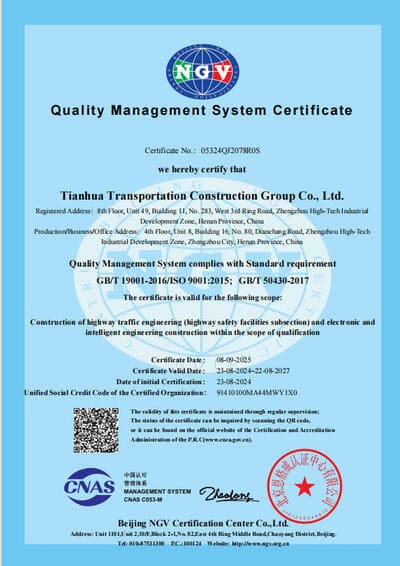 ISO9001 certification thermoplastic road marking paint manufacturer
Mohamed –
Our first mistake was asking what port other importers used. After checking the warehouse location and inland trucking cost, San Antonio was more practical for our Santiago-area stock than the route we first considered. The paint price was only one number; the real decision came after comparing port charges, customs timing, and delivery to the warehouse.
fatma –
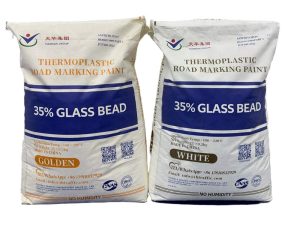
For a mining access road in the north, the buyer was not interested in the cheapest marking paint. Trucks and strong sun were the real concerns. We chose a formula with premixed glass beads because surface beads give the first reflection, but internal beads are more useful when traffic starts wearing the line down.
Douglas –
The job was a lane repainting section in Santiago, and the old asphalt looked acceptable from a distance. Once the crew started cleaning, we found old line residue and polished wheel-track areas. We applied primer before using Tianhua Traffic white thermoplastic paint. The new marking gripped the surface better, especially at the line edges where peeling usually starts first.
Louis –
We originally priced our Chile offer using a cautious 20ft loading figure because we did not want to overpromise. Tianhua’s team reviewed the bag stacking, pallet arrangement, container payload, and forwarder requirements with us. After the plan was confirmed, the loading reached 27 tons. That changed the freight-per-ton column in our spreadsheet and gave us room to quote contractors without cutting product quality.
Andrey –
The yellow paint was planned for a road section in a wetter southern area. The material was ready, but the pavement still held moisture after rain. We waited longer than expected and checked the surface again before marking. The final line looked better than the small test section we rushed earlier.
Mark –
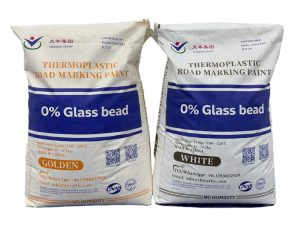
For a supermarket parking area, the owner mainly wanted neat white parking lines and visible yellow direction arrows. We did not use a high internal bead formula. A 0% premixed bead option with drop-on beads during application gave enough initial reflectivity and kept the project budget reasonable.
Rachna –
For local resale, Spanish packaging was more useful than we expected. Small contractors wanted to see color, storage reminders, application use, and whether the paint was suitable for arrows, zebra crossings, bus lanes, parking lines, or port-area markings. Tianhua’s OEM packaging option helped us avoid repeating the same explanation on every quotation.
Prem –
I am looking for cooperation with Chile road marking contractors, especially teams working on mining access roads, port yards, city repainting, parking areas, and pedestrian crossings. My work is mainly on site: push machine operation, hand marking around arrows and crossings, equipment setup, calibration, simple troubleshooting, and checking line thickness and bead spreading. I am interested in projects where the crew cares about clean edges, primer on old pavement, and long-lasting reflective lines.